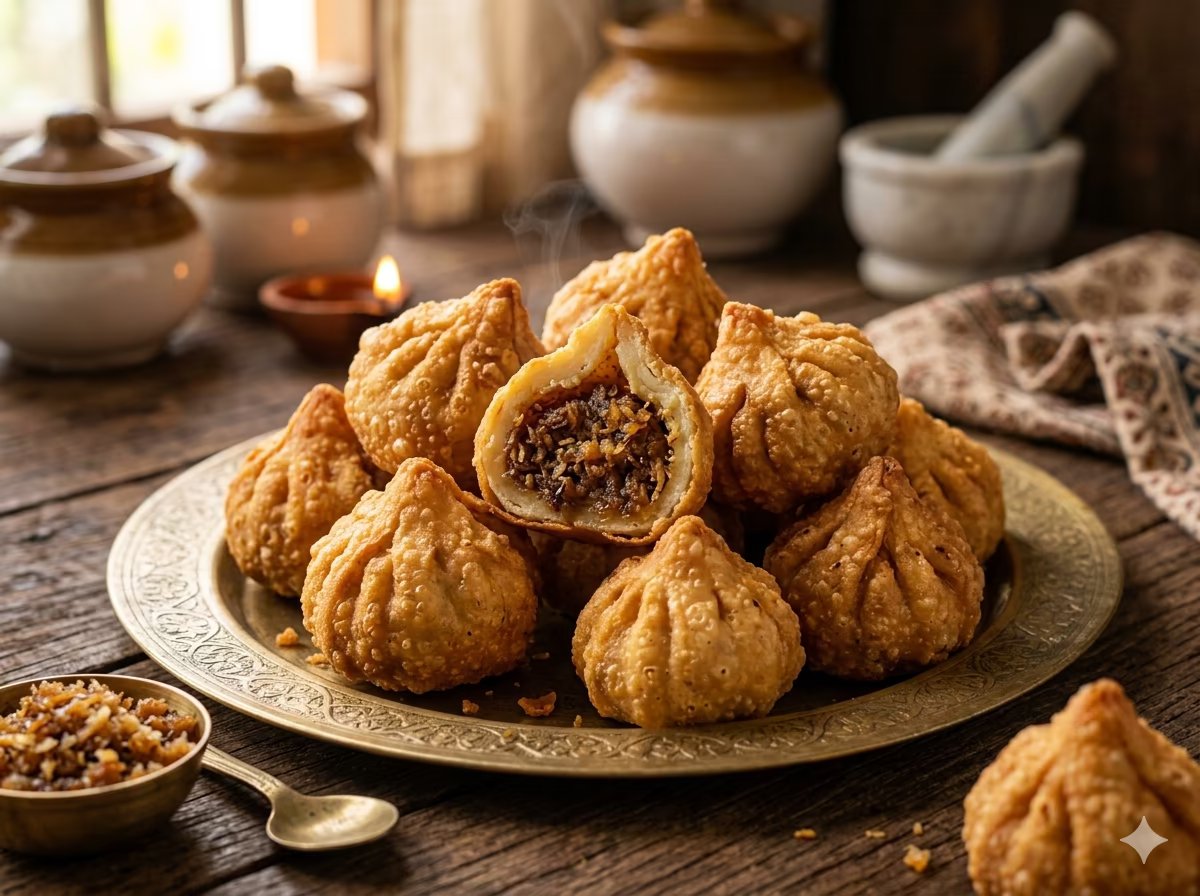
Ingredients
Makes 12 modaks. Scale using the Modak Calculator. Tap any ingredient to tick it off.
Method
Make the filling first
In a heavy pan, melt jaggery with 2 tbsp water. Add coconut and cook on medium heat, stirring continuously for 7–8 minutes until the mixture is completely dry and holds shape when pressed. Add cardamom and nutmeg off heat. Cool completely.
Make the shell dough
Combine maida, semolina, salt, and ghee. Rub the fat in until the mixture resembles breadcrumbs. Add water gradually, mixing to form a firm (not soft) dough. Firm dough = crisp shell. Soft dough = greasy modak. Cover and rest 15 minutes.
Shape the modaks
Pinch off a ball of dough (about 25g). Roll into a disc 3 inches across. Place 1 tbsp filling in the centre. Bring edges up and pinch into pleats. Seal firmly at the peak. For beginners: use a mould — press dough into both halves, fill, press closed. Trim seam.
Heat the oil
Heat oil in a kadai or deep pan to 160–170°C. Test with a small piece of dough — it should rise slowly and steadily, not burst to the surface instantly. Too hot = dark outside, raw inside. Too cool = greasy modak.
Fry in batches
Slide 3–4 modaks gently into the oil. Do not crowd. Fry for 4–5 minutes, turning once or twice, until evenly golden all over. Remove with a slotted spoon and drain on paper towel.
Serve or offer
Fried modak is best eaten warm but is also excellent at room temperature. Drizzle with a few drops of ghee before serving for the traditional finish. Offer to Ganesha before distributing as prasad.
Tips & Variations
Dough was too soft, oil was too cool, or both. Next batch: stiffer dough, check oil temperature with a thermometer. 165°C is the sweet spot.
Peak not sealed properly, or filling was too wet. Press the peak hard before frying and cook the filling longer next time.
Yes — fry the day before and store in an airtight container at room temperature. Reheat in an oven at 160°C for 5 minutes or in a dry pan. Do not refrigerate — it makes the shell soggy.
Yes. Replace half the maida with atta (whole wheat flour) for a slightly earthier, darker shell. Fully atta modak will be less crisp but more nutritious.
About This Recipe
Fried modak — talele modak in Marathi — is the practical, crowd-pleasing alternative to the delicate ukadiche. Where the steamed version demands timing and technique, the fried version rewards boldness. The maida shell is forgiving, the filling is the same sacred coconut-jaggery combination, and the result is a modak that stays crisp for hours rather than minutes.
In Maharashtra households, fried modak often appears alongside ukadiche on the Ganesh Chaturthi offering plate — the steamed as the sacred original, the fried as the generous addition. At larger gatherings where making 101 modaks is practical, fried modak is the workhorse. It scales easily, holds well, and travels without falling apart.
The semolina in the shell dough is a modern addition that significantly improves crispness — traditional recipes used only maida, but most current Maharashtra cooks add the rava for texture. It is a small change that makes a real difference.