Ingredients
Makes 12 modaks. Scale using the Modak Calculator. Tap any ingredient to tick it off.
Method
Make the sugar-free filling
In a pan, combine grated coconut and chopped dates over low heat. Stir for 3–4 minutes until the dates soften and begin to bind with the coconut. Add erythritol and mix. Cook for another 4–5 minutes until the mixture is dry and holds shape. Add cardamom and nutmeg off heat. Cool completely.
Make the dough
Identical to ukadiche modak: bring 250ml water to a rolling boil with salt and ghee. Add all rice flour at once, stir vigorously, rest covered 5 minutes.
Knead while warm
Knead with ghee-greased hands for 2–3 minutes until smooth. Keep covered with a damp cloth.
Shape
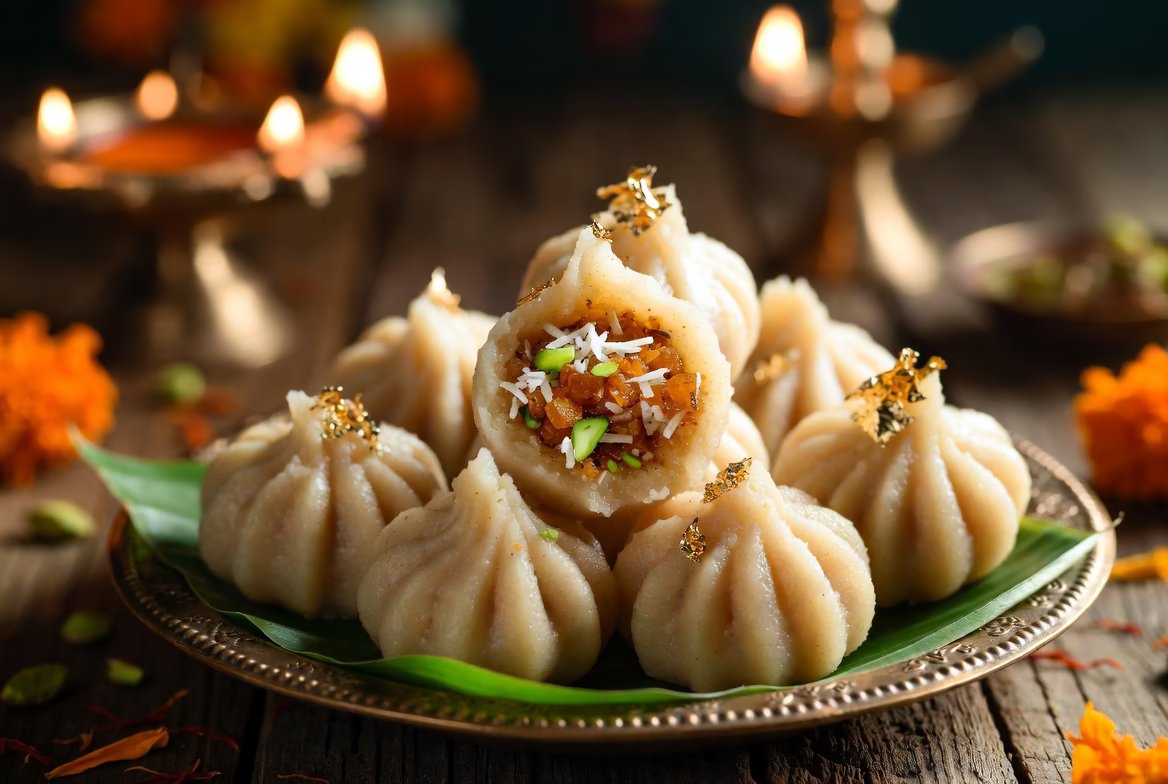
Hand-shape or mould exactly as ukadiche modak — lime-sized dough balls, pressed into disc on greased palm, 1 tbsp filling, 4–5 pleats gathered to a peak. The dough behaves identically to the original.
Steam 10–12 minutes
Steam on banana leaf or greased muslin at medium-high heat for 10–12 minutes. The shell turns translucent when done. Rest 5 minutes before handling.
Serve
Drizzle with a tiny amount of ghee (optional — adds ~15 kcal). Offer and distribute as prasad. Suitable for guests who cannot eat sugar when made with erythritol — but always advise guests of ingredients.
Tips & Variations
This recipe is designed to be lower in sugar than traditional modak. However, it is not medical advice. If you have diabetes, gestational diabetes, or any blood sugar condition, please consult your doctor before consuming. Even erythritol can affect some individuals differently. Coconut and dates both contain natural sugars.
Erythritol gives the closest texture to jaggery in the filling. Stevia-erythritol blends (like Truvia or similar) work well. Pure stevia can give a slight bitter aftertaste in cooked preparations — use sparingly.
For a fully natural sugar-free option: omit erythritol entirely and increase dates to 100g. The filling will be naturally sweet from dates alone, with a toffee-caramel quality. This option has a slightly higher glycaemic index than the erythritol version but no artificial sweeteners.
98 kcal assumes erythritol as sweetener (0 cal/g), 180g coconut, 60g dates, standard rice flour shell. If using additional dates or ghee drizzle, recalculate accordingly.
About This Recipe
The sugar-free modak addresses one of the great practical tensions of Indian festive eating: the traditional prasad is sweet, but a significant proportion of the people at any Indian gathering — particularly the elderly — are managing diabetes or blood sugar conditions. The choice between excluding oneself from prasad and consuming something medically inadvisable is an unnecessary one.
This recipe resolves it. The technique is identical to ukadiche modak. The shell is the same rice flour dough. The filling substitutes jaggery with a combination of dates (for binding and natural sweetness) and erythritol (for sweetness without blood sugar impact). The result is a modak that looks, smells, and feels like the real thing — because structurally it is.
The 98 kcal figure makes it the lowest-calorie modak in the ModakWorld collection — lower even than the steamed original (142 kcal). The fibre content (1.8g per modak) is slightly higher than standard ukadiche due to the dates. It is not a medical food — but it is a thoughtful, inclusive one.