Ingredients
Makes 12 modaks. Scale using the Modak Calculator. Tap any ingredient to tick it off.
Method
Prepare the paan mixture
In a small bowl, combine finely chopped betel leaves, gulkand, desiccated coconut, crushed fennel seeds, and rose water. Mix well. The mixture should smell exactly like a freshly made paan. Taste — it should be sweet, floral, slightly cooling from the betel leaf. Refrigerate while you make the chocolate base.
Make the white chocolate ganache
Chop white chocolate finely. Heat cream to just below simmering. Pour over chocolate, rest 2 minutes, stir from centre outward until smooth. Add butter and stir until glossy. Add cardamom and green food colour if using.
Combine ganache and paan
Add the paan mixture to the warm white chocolate ganache. Fold together gently — the mixture will turn pale green from the betel leaves. Cool at room temperature until the consistency is thick enough to spoon but not firm.
Fill the mould and set
Fill greased silicone modak moulds. Refrigerate 45 minutes to 1 hour until completely firm. Unmould carefully.
Garnish
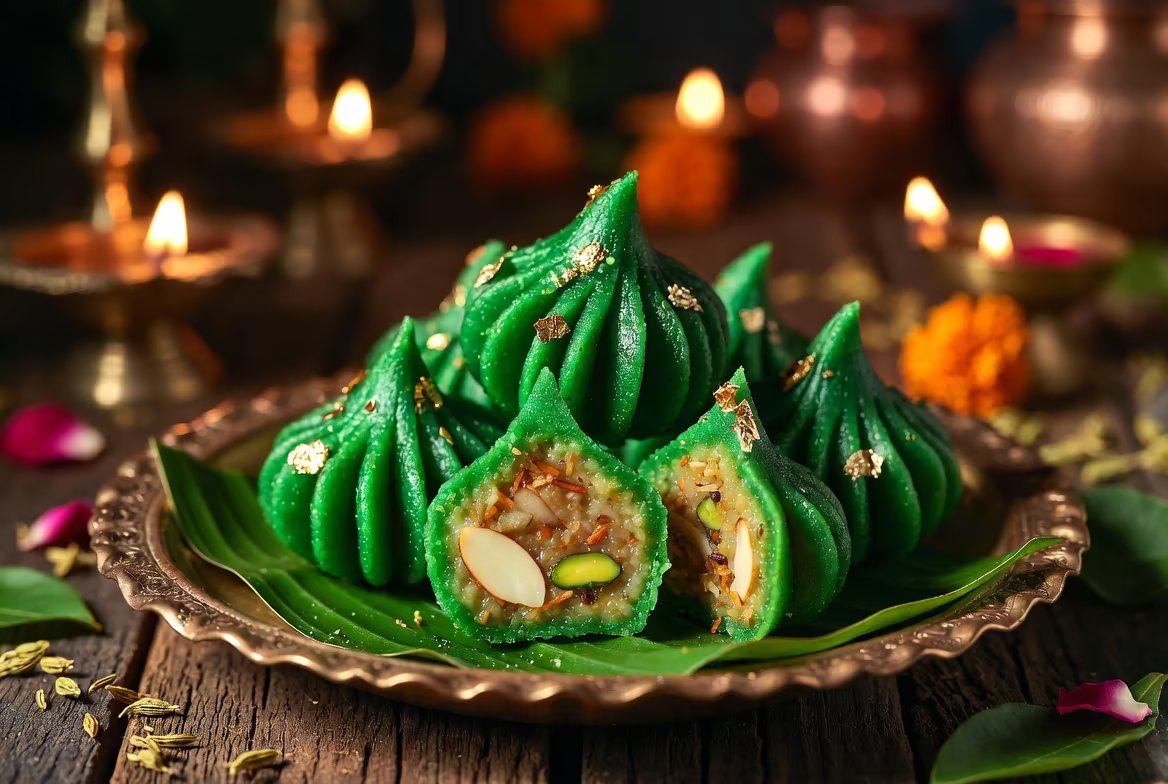
Dust with edible silver powder or press a small fragment of silver vark onto each modak. The pale green colour, silver finish, and paan fragrance make this the most visually distinctive modak in the collection.
Tips & Variations
Yes — betel leaf extract (available in Indian grocery stores and online) gives a more concentrated, consistent flavour. Use 1 tsp extract in place of 4–5 fresh leaves.
Gulkand is very sweet. 3 tbsp is balanced against 200g white chocolate — do not add more or the filling will be cloyingly sweet. Less is also fine for a subtler result.
Some people find betel leaf too strong or are unfamiliar with it. A softer version: omit the betel leaf and increase gulkand to 4 tbsp. Add rose water, fennel, and cardamom. The result is a rose-fennel modak — equally beautiful, more accessible.
Same as chocolate modak — 5–7 days refrigerated. The betel leaf aroma fades after day 3. Best enjoyed within 2 days when the paan fragrance is at full strength.
About This Recipe
Paan modak is the most conceptually ambitious of the modern fusion modak varieties — it takes the flavour profile of the post-dinner paan (betel leaf with gulkand and fennel), one of the most distinctly Indian sensory experiences imaginable, and installs it inside the country's most sacred sweet. The result is disorienting in the best possible way: you eat something that looks like a modak, has the weight and texture of a chocolate sweet, and tastes unmistakably of standing outside a mithai shop in the evening.
Gulkand — rose petal preserve — is the heart of this recipe. It is slow-cooked rose petals and sugar left in the sun for weeks, a preparation that has existed in Indian Ayurvedic medicine as a cooling digestive since at least the 16th century. Its flavour is concentrated rose with a slight tang and an extraordinary fragrance. Combined with white chocolate and the green, cooling quality of fresh betel leaf, the result is genuinely unlike anything else in the modak canon.