Ingredients
Makes 12 modaks. Scale using the Modak Calculator. Tap any ingredient to tick it off.
Method
Prepare the chana dal
Wash chana dal and soak in water for 1 hour (or 30 minutes in hot water). Drain. Pressure cook with just enough water to cover for 2 whistles — the dal should be cooked through but still hold its shape, not mushy. Drain completely and cool.
Make the filling
In a pan on low heat, add cooked dal, grated coconut, and jaggery. Stir continuously as the jaggery melts. Add turmeric and fennel seeds if using. Cook for 5–6 minutes until the mixture is dry and holds shape. Add cardamom off heat. Cool completely.
Make the dough
Boil water with salt and ghee. Add all rice flour at once off heat, stir vigorously. Rest 5 minutes covered. Knead with greased hands 2–3 minutes until smooth. The dough is identical to ukadiche modak shell.
Shape kadubu
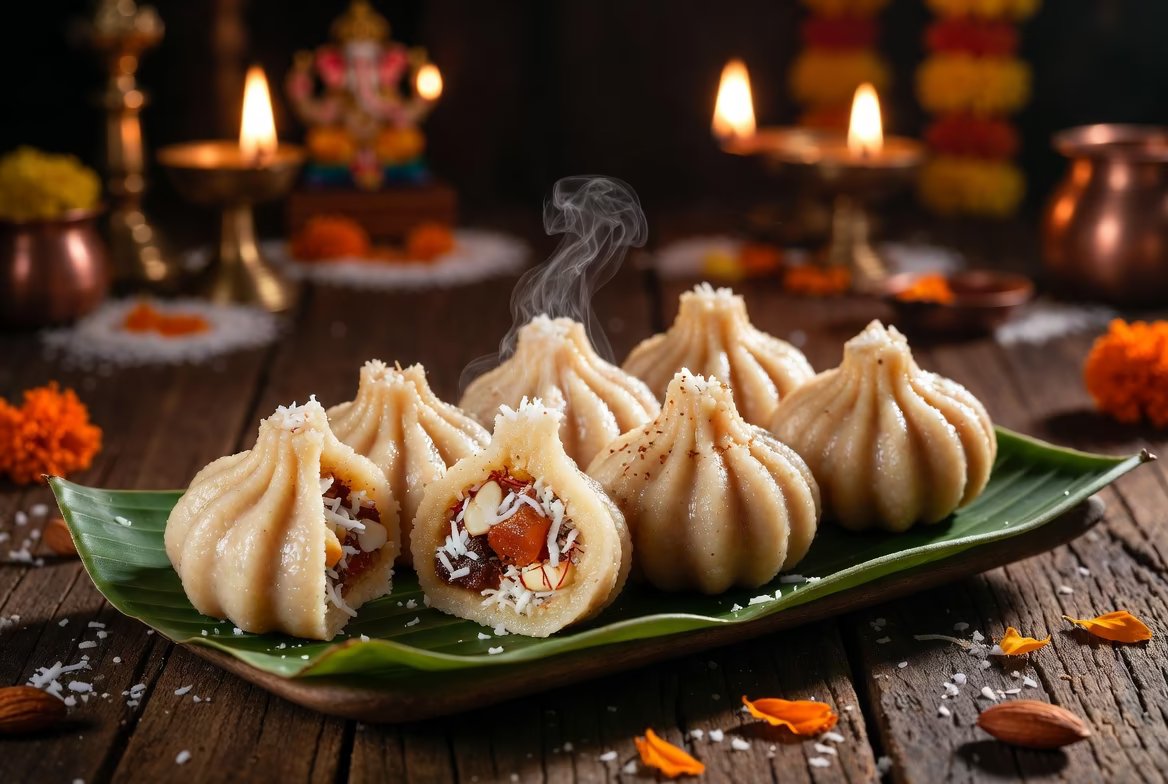
Karnataka kadubu is traditionally slightly larger than Maharashtra modak — use 35g dough portions rather than 25g. The shape is rounder and less sharply peaked. Press dough on greased palm, add 1.5 tbsp filling (the generous dal filling needs more room), bring edges up into 3–4 wide pleats, seal at top.
Steam 12–15 minutes
The dal filling makes kadubu slightly denser than coconut-only modak — it needs 12–15 minutes of steaming rather than 10–12. Steam on banana leaf at medium-high heat. The shell should be translucent and the surface firm when pressed lightly.
Tips & Variations
Over-cooked. Next time: 1 whistle in pressure cooker, or simmer in open pan for 15 minutes, checking every few minutes. You want soft but intact dal, not dal paste.
Yes — simmer soaked chana dal in a pan with water to cover by 2 inches for 35–40 minutes, checking regularly. Drain well. The soaking step is essential if not using a pressure cooker.
In Udupi and Mangalore, the kadubu filling sometimes includes freshly grated raw mango (when in season) along with the dal and coconut. The sourness of raw mango against the sweet jaggery is a revelation. If making in summer, try adding 2 tbsp grated raw mango.
The chana dal filling makes kadubu the highest-protein modak in the standard range — 5g protein per modak, compared to 2g for ukadiche. The higher fibre content (2.2g) from the legume also makes it the most satiating.
About This Recipe
Kadubu is Karnataka's answer to the question that each region of India has answered in its own way: how do we take this sacred rice dumpling and make it our own? Karnataka's answer is chana dal — the split yellow chickpea that anchors much of South Indian cooking.
The dal filling — called kayi hoorna or puran in Kannada — transforms the modak from a primarily sweet experience into something more complex. The coconut and jaggery are present, but the dal adds a nuttiness, a slight earthiness, and a textural interest that makes each bite different from the last. It is a more substantial modak than the coconut-only versions, and a more nutritionally complete one.
Kadubu appears on festival plates across Karnataka for Ganesh Chaturthi (called Ganesha Habba in Kannada), but also at other festivals throughout the year. Some Karnataka families make a savoury version of kadubu with a coconut-and-herb filling for non-festival occasions — the same shell, a completely different purpose.